Early Brain Development:
Powering Creativity and Economic Growth
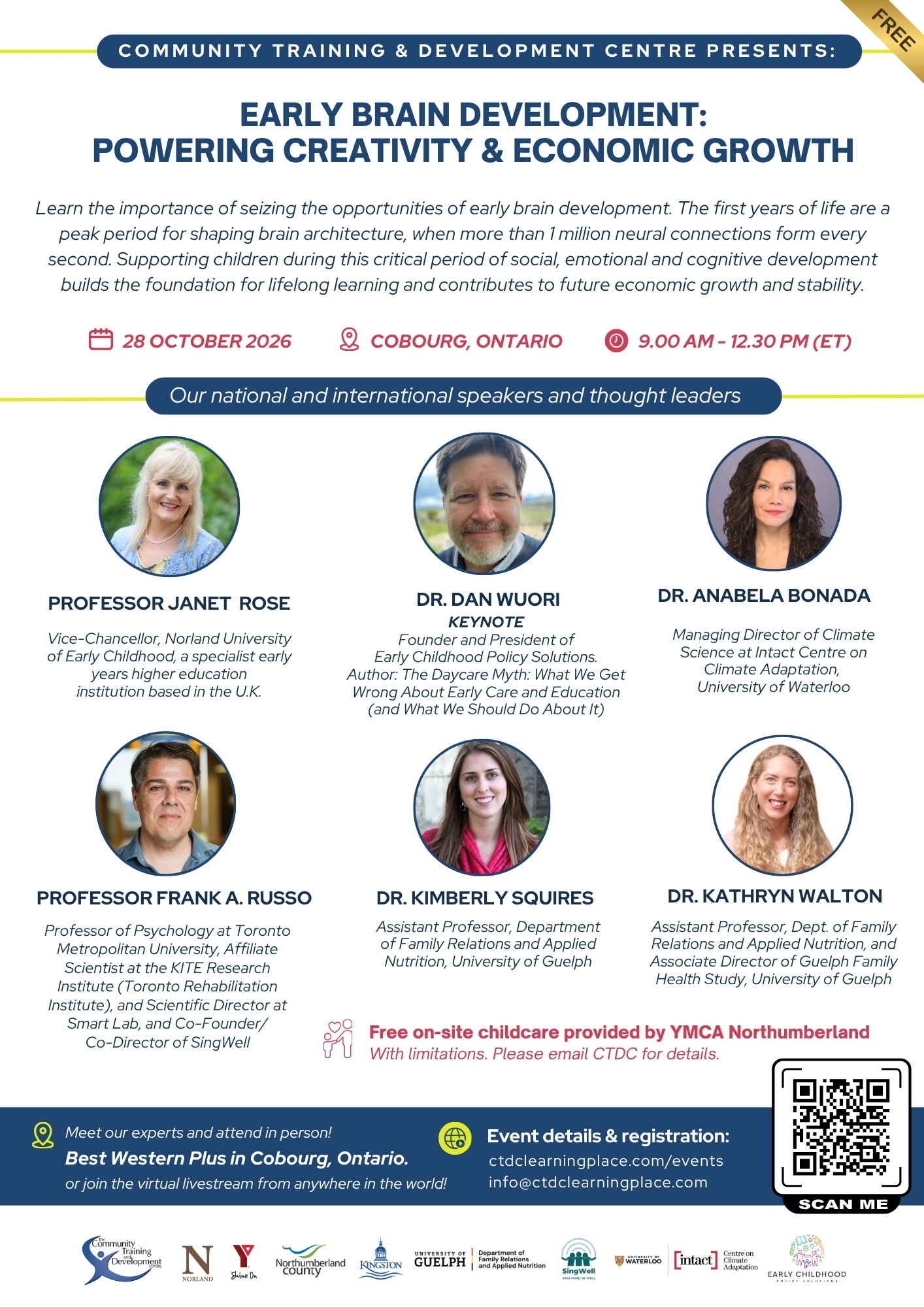
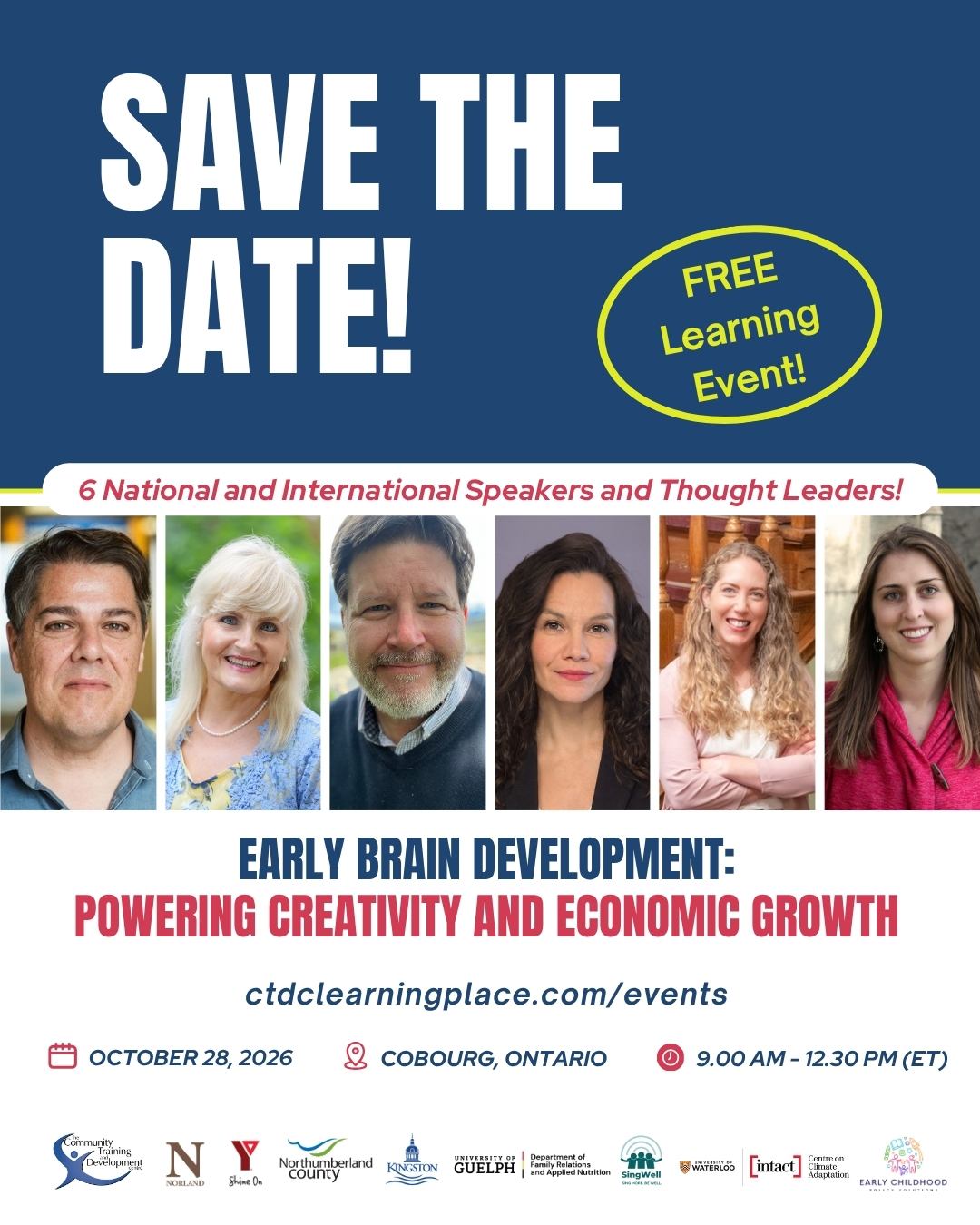
FREE IN-PERSON & ONLINE EVENT
Wednesday October 28, 2026
The Best Western Plus, Cobourg ON.
9:00am - 12:30pm (ET)
Free on-site childcare provided by
YMCA Northumberland
*Conditions apply and limited spaces available. Must be booked in advance. Email info@ctdclearningplace.com for details.
Join us on October 28th to explore the research, innovation, and leadership shaping the future of early learning and the workforce behind it.
Global Perspectives
Learn from national and internationally recognized experts in the early learning field.
Evidence-Based Ideas
Discover international research and innovative practices that are making a difference.
A Stronger Future
Reshaping how we think about education, workforce readiness, and the economic value of investing in the early learning sector.
GLOBAL EXPERTS. INNOVATIVE IDEAS. THE LATEST BRAIN SCIENCE.
Seize the opportunities of early brain development!
"Early Brain development is dependent on stable, nurturing relationships
with highly engaged adults"
Dan Wuori, The Day Care Myth
Global Experts

KEYNOTE
Dr. Dan Wuori
Joining us in-person, Dr. Wuori has more than 30 years of early years leadership and is the Founder and President of Early Childhood Policy Solutions, a bipartisan public policy consultancy focused on the needs of young children, their families, and the early years professionals who serve them.
To parents the world over, Dan is known not for his policy work, but for his innovative use of social media to educate about infants and toddlers.
His book, The Daycare Myth: What We Get Wrong About Early Care and Education (and What We Should Do About It) explores the costly disconnect between what we know and what we do when it comes to the needs of young children.
*Attend the in event in-person and enter our draw for a chance to win a copy of The Daycare Myth!
Dr. Dan Wuori
The Daycare Myth. Shifting the Narrative on Early Childhood and Early Learning — Essential, Complex, and Undervalued.
For a century, early childhood policy has been premised on a myth. This falsehood―which dictates that child care and education are somehow separate and distinct―not only sub optimizes the most important window into all human development, but costs taxpayers an untold fortune. It’s time to think differently.
Written in plain yet provocative language by one of the field’s most respected bipartisan policy experts, The Daycare Myth makes the case for why the early years matter; why our longstanding early childhood policy approach sacrifices the needs of young children in favour of promoting adult employment; and why fixing the problem makes good sense, regardless of your place on the political spectrum.
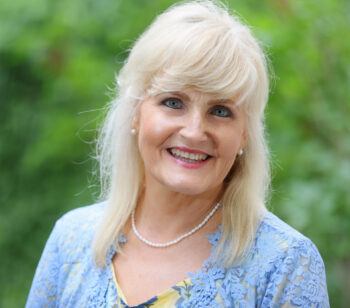
Professor Janet Rose
Joining us virtually from the U.K, Professor Janet Rose is Vice-Chancellor of Norland University of Early Childhood, a specialist early years higher education institution based in the UK and was awarded a Fellowship in Early Relational Health (Infant Mental Health) from the University of Massachusetts.
She is co-founder of Emotion Coaching UK which trains and researches the use of Emotion Coaching to support the development of children’s self-regulation, behaviour, wellbeing, and resilience, drawing on research from the field of neurophysiology.
Professor Janet Rose is also a Level 1 Theraplay Practitioner, a Sensory Integration Facilitator and a Sensory Attachment Intervention practitioner.
Professor Janet Rose
Brain Architects! Our role as co-creators in early brain development.
Early years practitioners act as co-creators of early brain architecture by creating safe, nurturing and stimulating environments where children feel secure to explore, learn and form relationships. Through warm, responsive and consistent interactions, they help build the neural connections that underpin learning, language, emotional wellbeing and social competence. By recognising and responding sensitively to children's individual needs, interests and cues, they support the development of self-regulation and executive functioning skills during the most important period of human development. In doing so, early years practitioners lay the foundations for lifelong health, wellbeing, resilience, learning and achievement.
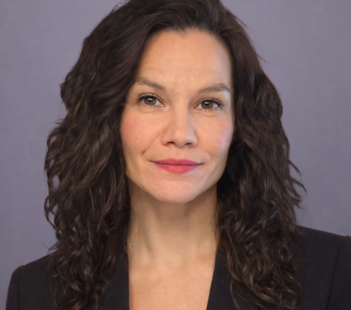
Dr. Anabela Bonada
Joining us in-person, Dr. Bonada is the Managing Director of Climate Science for the Intact Centre on Climate Adaptation, University of Waterloo - advancing practical climate adaptation strategies through risk assessment, policy integration, and implementation tools.
She leads the Centre’s wildfire work, oversees its extreme heat initiatives, and co-leads flooding initiatives, translating research into cost-effective guidance for municipalities, residents, and industry partners.
Dr. Bonada developed Canada’s first standardized community wildfire risk assessment framework, strengthening climate resilience and informing adaptation policy, national standards, and government risk reduction strategies.
Dr. Anabela Bonada
Climate Change and Education: Impacts on Children, Families, Schools and Educators
Extreme weather, including heat waves, flooding, wildfires and wildfire smoke, is increasingly affecting children, families, schools, and educators. This talk will examine how these hazards can disrupt health, learning, daily routines and school operations, while placing additional pressures on caregivers and education professionals. It will also highlight practical actions that schools, child-care settings, families and communities can take to reduce risk, strengthen preparedness, and create safer, more climate-resilient environments for children.

Dr. Kimberly Squires
Joining us virtually, Dr. Squires is Assistant Professor, Department of Family Relations and Applied Nutrition at the University of Guelph.
Registered Early Childhood Educator (RECE) and Ontario Certified Teacher (OCT) and has previously worked in both child care and school-based early childhood education and care (ECEC) settings.
Her research focuses on a variety of aspects of ECEC with a specific interest in outdoor and nature play and pre-service and in-service educator learning.
Dr. Kimberly Squires
Outdoor Play and Nature: Supporting the Physical and Mental Health of Children
Children's healthy development depends on opportunities to move, explore, take risks, and connect with the natural world. This presentation will examine how outdoor play and experiences in nature support physical health, emotional well-being, self-regulation, and early brain development. Drawing on current research and practical examples, participants will learn how natural outdoor environments can help foster the foundations for lifelong development, health, and learning.
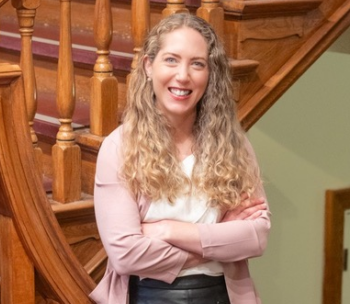
Dr. Kathryn Walton
Joining us virtually, Dr. Walton is Assistant Professor in the Department of Family Relations and Applied Nutrition at the University of Guelph.
Associate Director of the Guelph Family Health Study, a family-based cohort study designed to identify early-life risk factors of chronic disease and test strategies to support healthy behaviours among children and their families.
Her research focuses on evidence-based feeding practices that support children’s healthy growth and development, including how home environments influence health and how to support children at risk of eating difficulties and those born preterm.
Dr. Kathryn Walton
How Children Eat: Supporting Healthy Eating Behaviours, Growth and Brain Development in the Early Years.
Dr. Walton’s presentation will focus on the development of children’s eating behaviours, the role of nutrition in supporting healthy growth and brain development, and how early childhood educators can use supportive feeding practices to foster healthy eating behaviours during the early years.

Professor Frank A.Russo
Professor of Psychology at Toronto Metropolitan University, Affiliate Scientist at the KITE Research Institute (Toronto Rehabilitation Institute), and Scientific Director at Smart Lab, and Co-Founder/C-Director of SingWell.
He also serves as Chief Science Officer for LUCID, advancing AI-driven music-based digital therapeutics.
His research investigates the neuro-cognitive, neuro-affective, and socio-biological aspects of music, speech, and hearing.
Professor Frank A. Russo
Why Music Matters: The Science of Music, Belonging, and Healthy Child Development
Music is often viewed as an enrichment activity, yet a growing body of research suggests it plays a fundamental role in healthy child development. Shared musical experiences, particularly singing, support the development of language, attention, self-regulation, social understanding, and emotional wellbeing while strengthening children's sense of trust, belonging, and connection to others. This presentation will examine the latest evidence from psychology, neuroscience, and education to explore how music shapes the developing brain and contributes to healthier, more inclusive learning environments. It will also consider the implications of this evidence for education and childcare policy, asking whether access to meaningful musical experiences should be viewed not as an optional enrichment, but as an essential investment in children's development and lifelong wellbeing.
“The early connections made in a baby’s brain form the foundations
for the more complex connections that form later."
EVENT HOSTED BY:
For 30 years, the Community Training and Development Centre (CTDC) has developed and delivered innovative training programs for the early learning and childcare sector, while also supporting workforce development across a range of industries.
Working with employers, researchers, educators, and community partners, CTDC creates evidence-informed learning opportunities that strengthen skills, support career growth, and respond to evolving labour market needs. Learn more about CTDC here.
Media Contact
Madelaine Currelly, CEO
The Community Training and Development Centre
905-372-9967
mcurrelly@ctdclearningplace.com
Shareable Resources
"Investing early can create even greater returns – quality early childhood programmes have demonstrated annual returns of
7-13% and delivered up to 9:1 benefit-to-cost ratios in low- and middle-income countries."
Event Partners/Collaborators:
